HABITS OF A KATYDID

Habits of a Katydid Zine by Cat Jones 2018

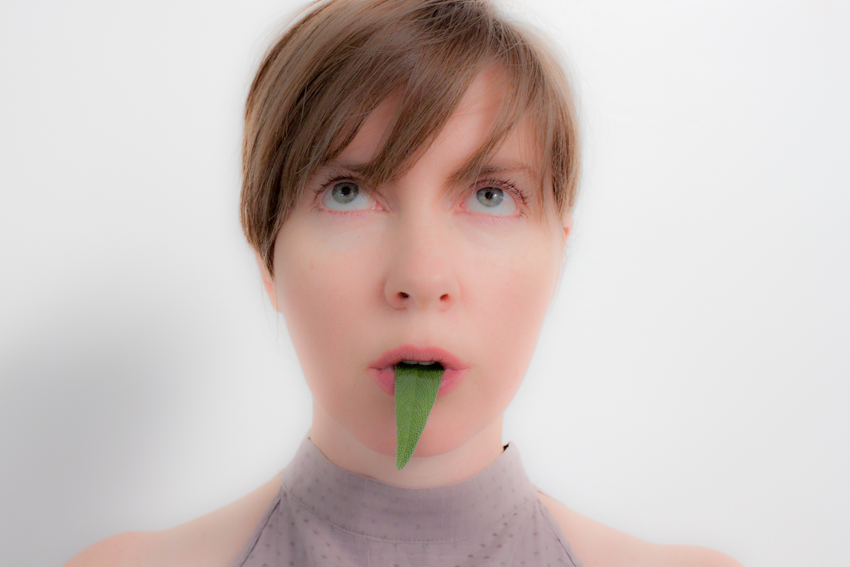
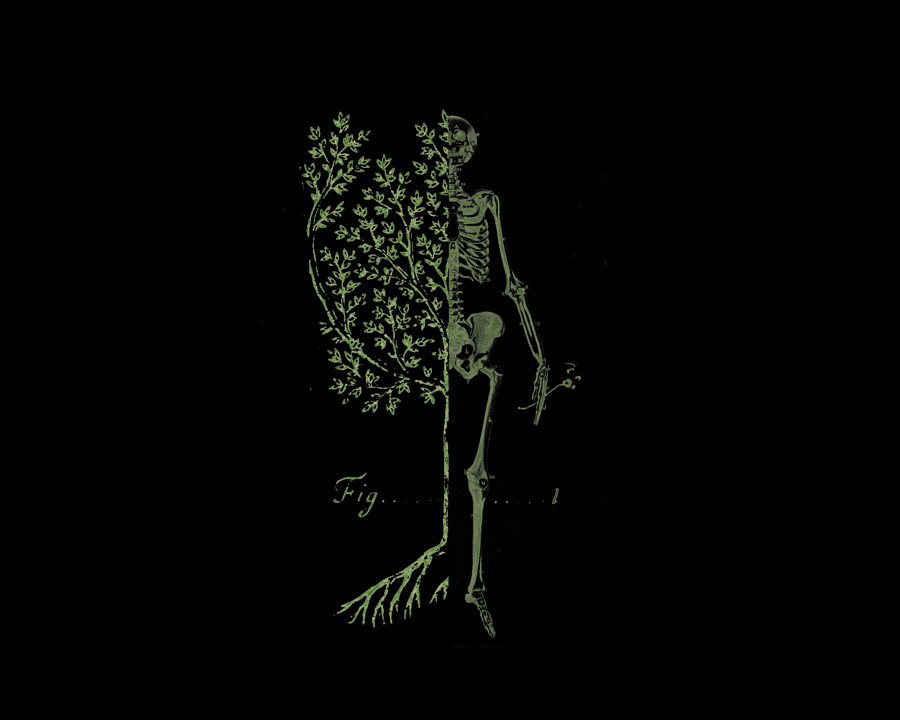
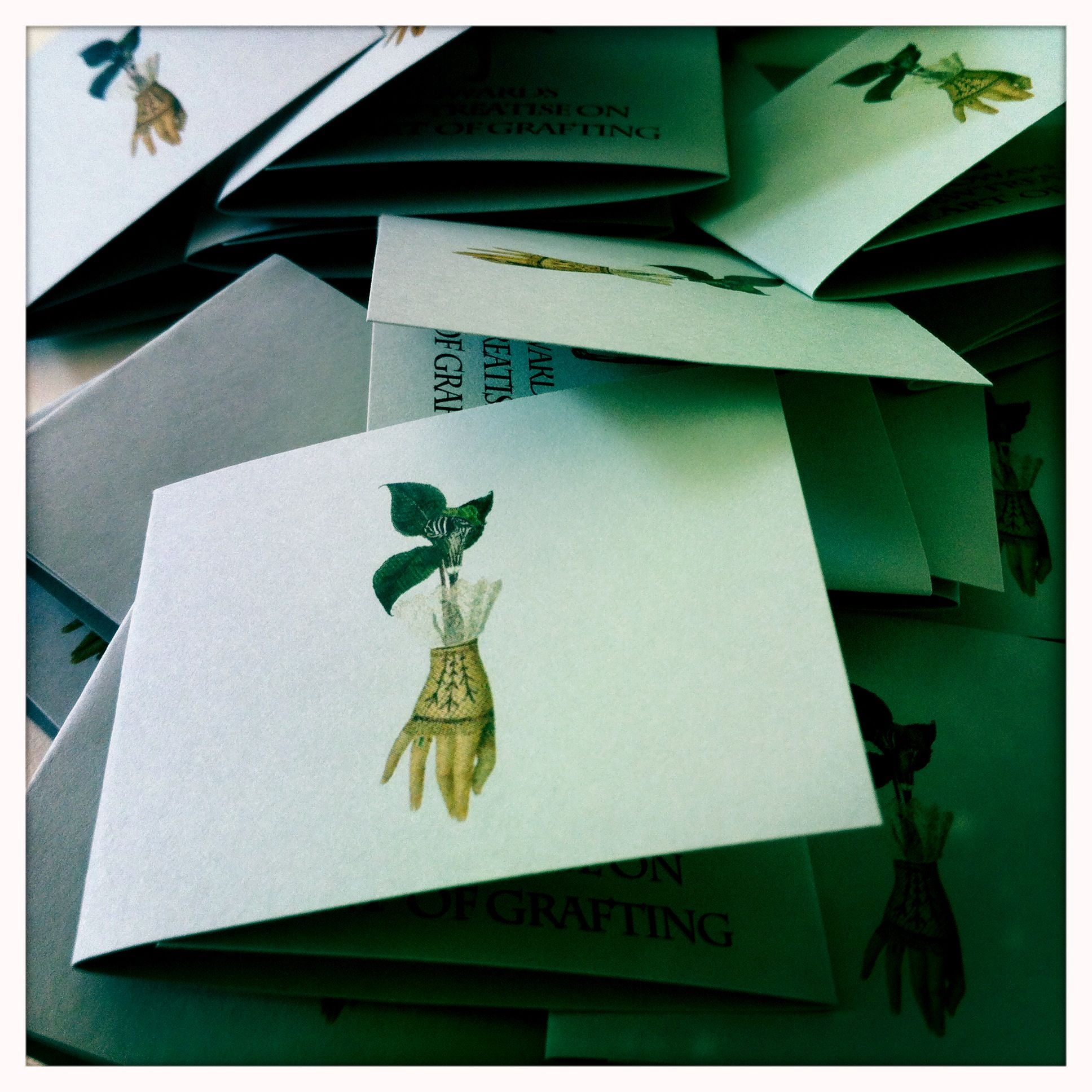
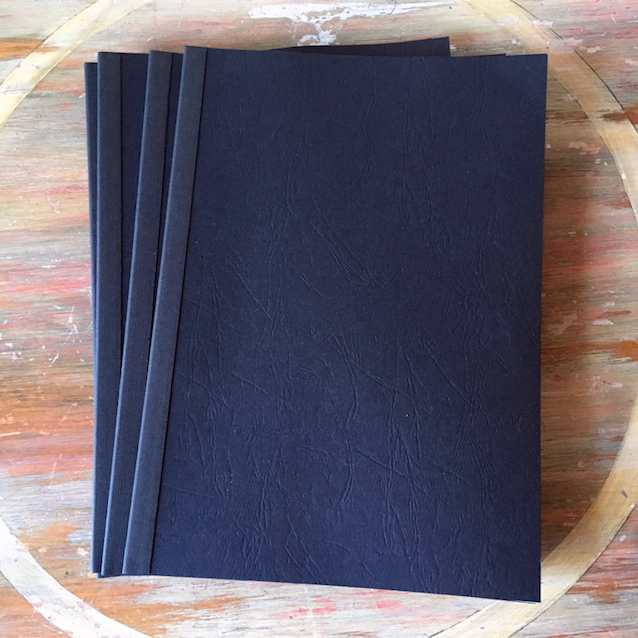
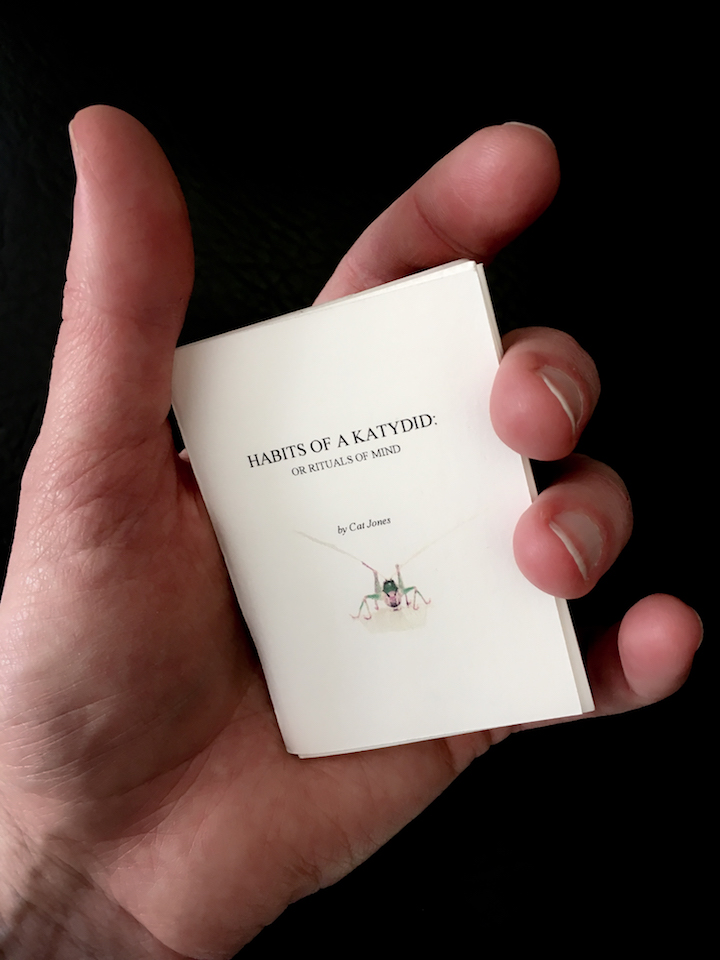
Habits of a Katydid or Rituals of Mind is a tiny fold out zine.

A multi-species study on teachers, medicine and iatrogenesis.

Chapters I-VII are titled Hunger, Thirst, Cleanliness, Rest, Metaphysics and Freedom.

Take a look on ISSUU.

Habits of a Katydid Zine

8 page zine with a Katydid Mandala overleaf. Dimensions 7.5×5.5cm folds out to A5. Colour print on 210gsm smooth wash card. Price includes postage within Australia.

A$8.00

EDITIONS AND SAMPLES – CENTURY’S BREATH

Winner of the Sadakichi, Art and Olfaction Award 2016.

Olfactory landscapes from the future, in commemoration of the Climate Century.

MATERIALS

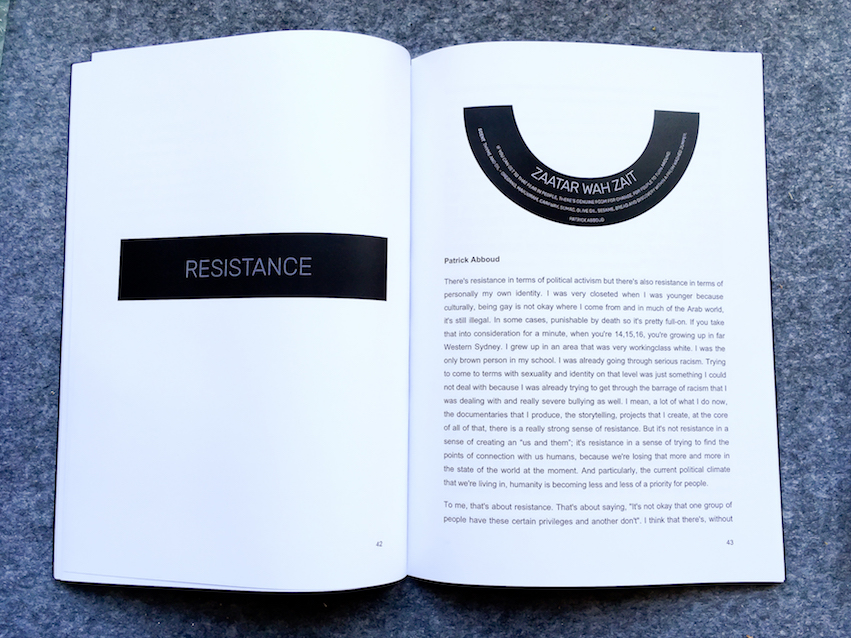
Textured wash paper 210gsm, brass fixings, black velvet ribbon, amber glass, scent molecules, black card setting in a rigid box.

BOXED SET SMALL

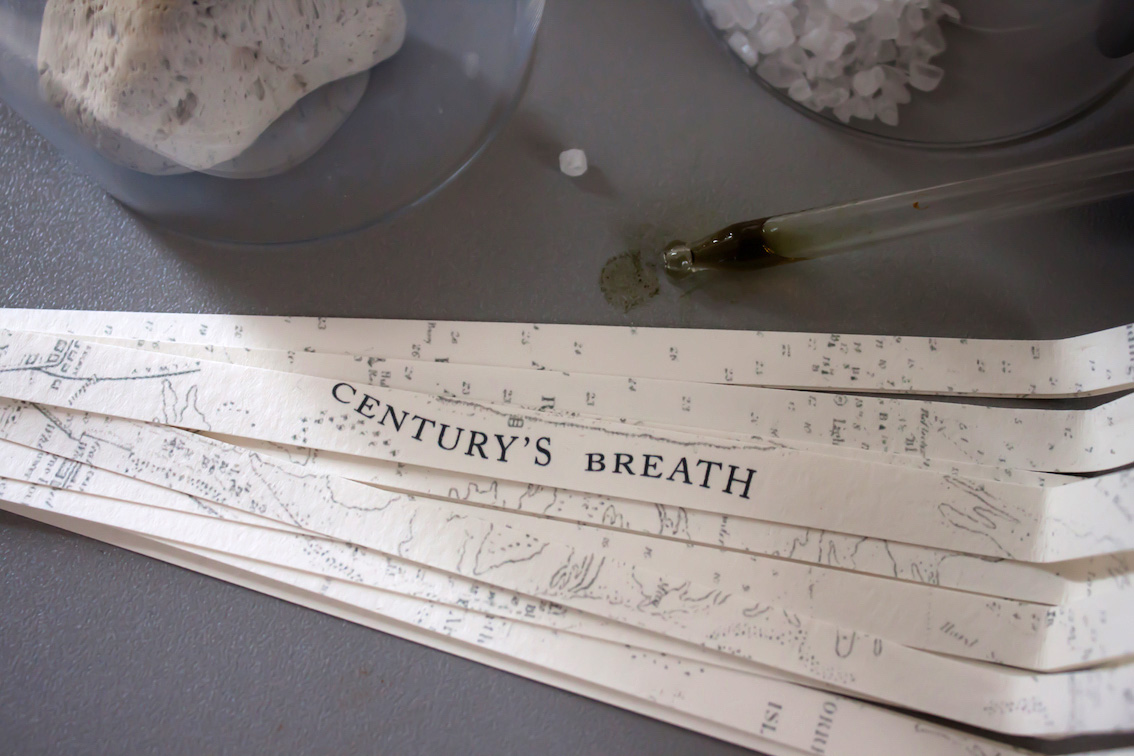
A5 box, hand made artist book collection of scribed scent designs (148cm x 105cm), 4 sample scents, set of printed scent strips.

BOXED SET LARGE

A4 box, hand made artist book collection of scribed scent designs (210cm x 148cm), 10 sample scents, set of printed scent strips.

INDIVIDUAL SAMPLES

4 mls scent, fold out concept card with tear off test strips

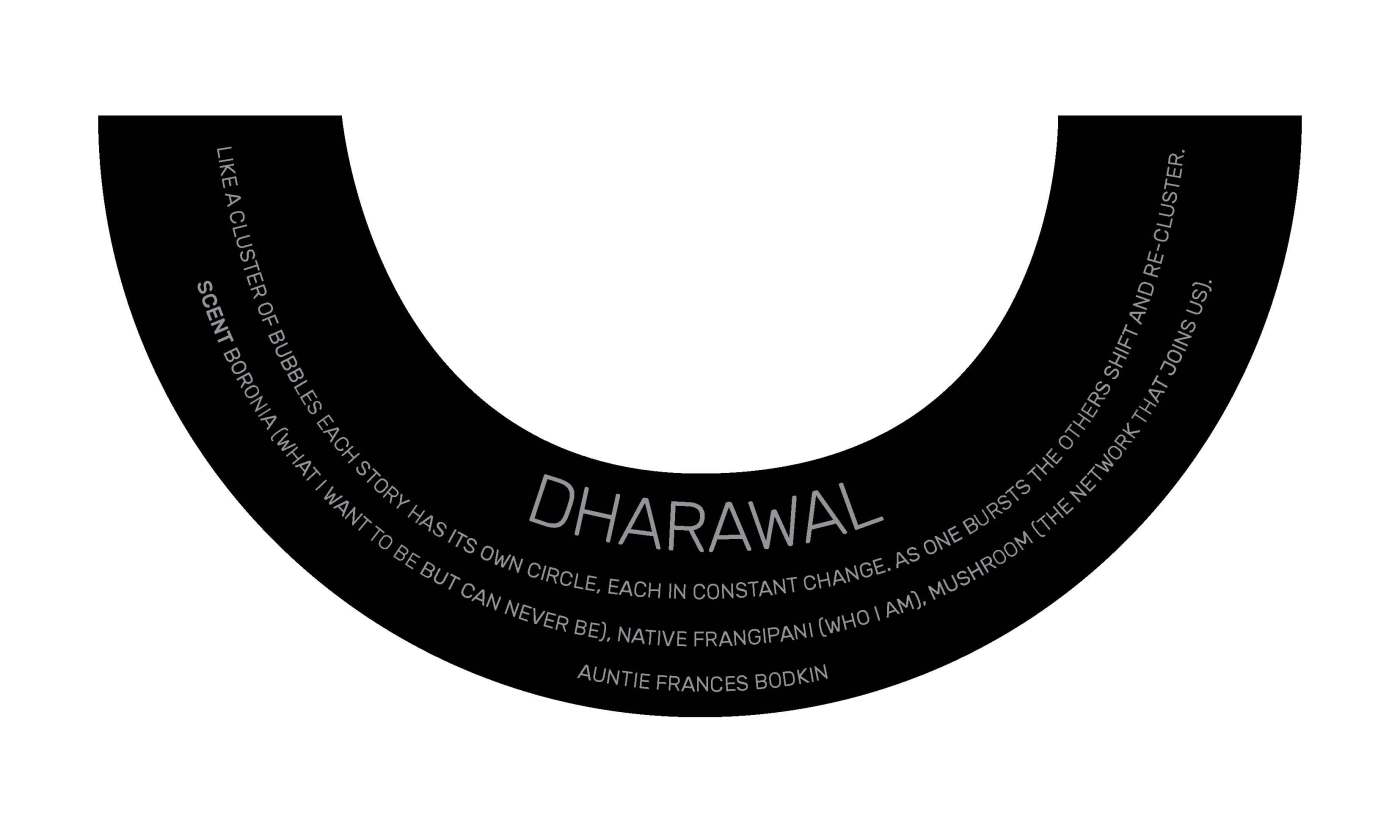
Click through the images below to read the aroma designs.

Save

Save

Save

Save

Save

Save

Save

Save

Save

Save

Save

Save

Save

Save

Save

Save

CENTURY’S BREATH

“Enthralling…really takes you somewhere…really makes you think.”

The Scentinel, AiX Scent Fair, Hammer Museum

“A frightening look at the future of a wild and beautiful part of the world.”

Dr Ellen Covey, Ca Fleure Bon

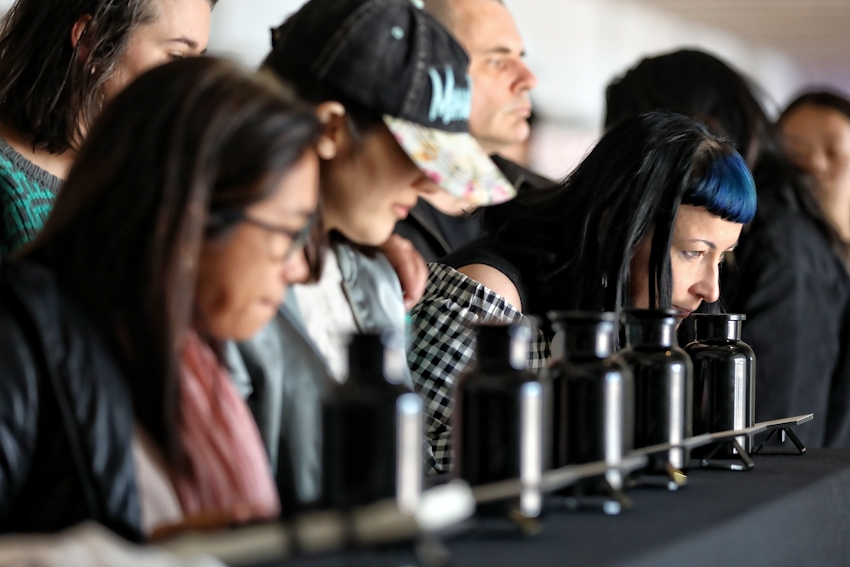
Century’s Breath is a live artwork and installation of olfactory landscapes from the future, designed by community, in commemoration of the Climate Century. Created in response to the site of LeFevre Peninsula, South Australia, known in the language of traditional custodians, the Kaurna people, as Mudlhannga, the nose place.

In this series of fleeting monuments to time and place are the building blocks of a chemistry that affects us all – our visions for the future. From the sulphuric shroud of mangroves, to the breath of a new species, together we describe the first, the last, the lost and the gained breaths of a century.

2015 Commissioned by Vitalstatistix for Climate Century

2015 Presented at SA Maritime Museum 12 November – 13 December

2015 Presented at AiX Scent Fair, Hammer Museum, Los Angeles

2016 Winner of the Golden Pear, Sadakichi Art and Olfaction Award 2016

2018 Presented at Sense It Feel It, Artists on Climate Change, Sydney Opera House

2018 Presented at Underground, Green Square Library, Sydney

Boxed Edition acquired by Aesop, Manly Library and private collectors.

Climate Century (2014-2018), a multi-year project by Vitalstatistix, invites artists to respond to the provocation: how will we commemorate and memorialise the climate century? Artworks that respond to the coastal and river environs of Port Adelaide and the LeFevre Peninsula are informed by the insight and foresight of local environmentalists, and conjure surprising, intriguing and beautiful interpretations of climate change that range from the melancholic to the utopian. Visual, sound and live artworks are presented alongside a month of public events and talks. The creative team includes Sasha Grbich, Lindl Lawton, Kristin Alford, Emma Webb, Cat Jones, Prudence Gibson, Julie Henderson, Matthew Bradley, Sundari Carmody, Tristan Louth-Robins and Tristan Meecham.

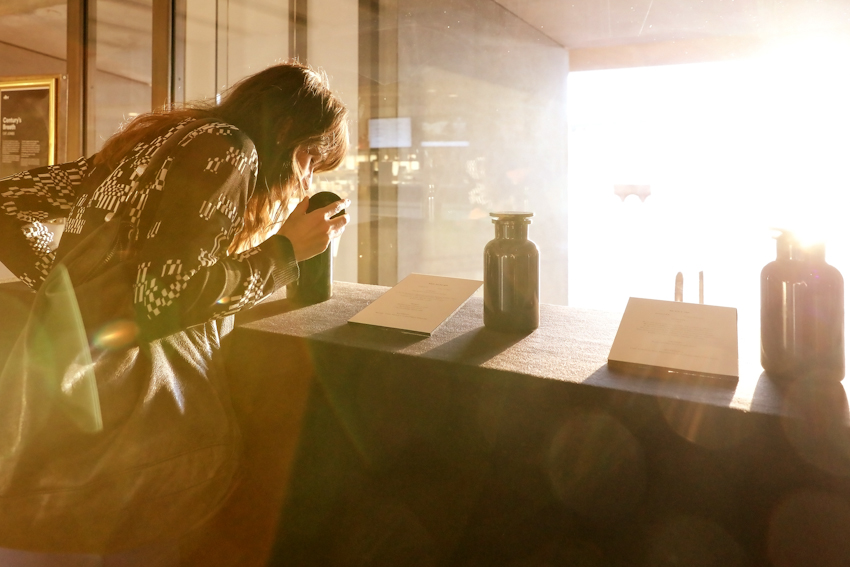
Installation view, Century's Breath by Cat Jones, Sydney Opera House. Image copyright 2018 Prudence Upton.

Century's Breath, Sense It Feel It, Sydney Opera House, 2018 © Prudence Upton

Visitor responses to individual scents exhibited

[Responsibility] “Subtle, complex. A sense of deep emotion. You need to wear responsibility, you have to own it. It’s personal it has weight and layers to it – as does the scent.” 

[Western Sour] “Disgusting, revolting, I love it!”

[Red Autumn] “Rich, deep, beautiful, evocative, emotional, passionate. It gets to the heart of the matter.”

Acknowledgements

Commissioned for Climate Century by Vitalstatistix.

Cultural permissions for place name and translation references given by Kaurna Warra Karrpanthi, Kaurna Warra Pintyanthi.

Prior research supported by the Australian Government through the Australia Council, its arts funding and advisory body; and The Institute of Art and Olfaction, Los Angeles.

Special thanks to curators Emma Webb and Sasha Grbich; Emma O’Neill, Ollie Black, Barbery O’Brien, Proximity Festival, Helen Cole, Jen Jamieson, Anna Dunhill, Loren Kronemyer and  Saskia Wilson-Brown.

This project has been assisted by the Australian Government through the Australia Council, its arts funding and advisory body.

Climate_logos

2016_Winner_BLK_Transparent

Save

Save

TRANSPLANTING IMMORTALITY AND THE SPIRITUAL

Published in Realtime Issue #127 June July 2015

SXSW Interactive 2015

Map Your World, The Revolutionary Optimists, Kolkata Map Your World, The Revolutionary Optimists, Kolkata

In the space of two years between 2013, when I first attended, and 2015, content acceleration at SXSW Interactive has moved from innovative to exponential and something to write home about.

SXSW is a machine controlled by business; its body, its blood flooded with marketing psychology. The likelihood of brainwash is frighteningly real. Along with cranial lavage, you will need the stomach to attend. It’s also a bloodbath of free, independent thinking. You may leave as I did with a strange mix of adrenalin rush, rising nausea and the sense of hopelessness that any of us, individuals or groups, are free or have the capacity or sway to make social change anywhere in the world or that technology in any form ever was or ever will be good. Corporations have us, and our governments, well stitched up.

Although harder to find in 2015, it’s fascinating that there are gems of unique art and culture framed in this entrepreneurial context. There are conversations that coalesce activism, the senses, community, story and so much more. SXSW Interactive is a week of pure intellectual rigour, conceptual genius, leaps of faith, technical adventure and disruptive reality checks. I haven’t found such a combination anywhere else. In a minefield of charisma, brands, NLP (neuro-linguistic programming) and festival loot, let’s touch on a sprinkling of 2015’s offers dealing with some of our oldest compulsions: immortality, spirituality and revelatory technology.

Martine Rothblatt: immortality & AI selves

Martine Rothblatt is CEO and Chairman of United Therapeutics, author of Virtually Human: The Promise—and Peril—of Digital Immortality (2014) and of The Apartheid of Sex: Manifesto on the Freedom of Gender (1995). In her interview keynote for SXSW Interactive, part of the Art, Science and Inspiration program, she described her personal quest to alleviate the suffering of transplant patients along with a recount of other super achievements (like the world satellite radio Sirius XM) and of philosophies being forged by her scientific and technological inventions.

The project closest to her heart is based on xenotransplantation: a limitless supply of organs for immediate human transplant, created from genetically modified pigs—and prompted by her daughter’s then incurable lung disease [subsequently cured by Rothblatt and her collaborators]. Rothblatt reports that transplant survival with her new model has gone from hours to eight days. She suggests that once one month is reached, a year and longer will be not far behind.

Her side project is the creation of a digital clone of the human mind made from accessing mannerisms, recollections, feelings, beliefs, attitudes, ethics and values gathered from our digital traces—social media, emails. Google is currently writing mindware from this information. Rothblatt has created a proof of concept, BINA48 (2010), an artificially intelligent mind clone of her wife that inhabits a head and shoulders robotic bust of same. Where these projects and Rothblatt’s philosophies converge is in immortality where networked artificial intelligence enters a constructed living body, to replicate someone who has or already exists.

Reflecting our progress towards Singularity, our vocabulary of terms like “software-mind” is shifting to objectify the human and preference non-human in terms like “brain-based original” and “human-level consciousness.” Rothblatt is also a lawyer. The keynote brought to the fore Rothblatt’s agitation for philosophies and legal steps to provide identity law for future forms of life. A person can be natural or juridical (like a corporation). Wild law extends this premise to the Earth as a legal person with rights of jurisprudence. In Virtually Human, Rothblatt advocates for machine law and the machine as an identity.

I come out of this session, like many others, mind racing, exhilarated by human intelligence and accumulative knowledge yet sort of shattered: not really understanding tomorrow, alienated from fellow humans, asking why we desire the things Rothblatt proposes. I feel the incongruity of a new generation gap to come. Someone online asks, “Who pays to maintain this virtual self after the person it was created for dies?”Are these constructions responsible for their own survival or will they be wards of state? What are the economic drivers? At what point is the non-human reclassified as human? Questions to add to those for SymbioticA’s Neolife Symposium 1-3 October this year.

Rothblatt rolls out her vision as if it’s natural evolution. She makes sense, she’s rational, progressive, she’s emotionally connected, she has a family, is a political activist, founded a religion. We are frogs taking a swim in a satellite-connected waterhole of her making with very high sides, set over a flame.

Spirituality Through Interactive Technology

I found comfort at the Spirituality Through Interactive Technology panel, an intriguing gathering of cross-disciplinary humans in the audience: health practitioners, filmmakers, scientists and spiritualists. The session led with the premise that traditional interactive media has a bias for thinking from the perspective of the other, highlighting instead early trends that make space for “internal immersion” through self-perspective—that VR experiences in this vein are described with the word ‘presence’ and that VR is being used in new ways. And that presence and the intensity which people experience through these new experiences is producing happiness and empathy.

The conversation extended to neuroscience research by Olaf Blanke into perceptions of presence and other recent research suggesting that the brain is an embassy of the digestive system, not the centre but a creation of a more ancient system and placed at the periphery—our heads. There are after all more nerve cells in the digestive system than there are in the brain.

The session was run by interactive story architect and choreographer Michel Reilhec and Opeyemi Olukemi, Manager, Interactive at Tribeca Film Institute. Artists from the TFI program ANAGRAM (UK) hosted their own panel, with a pen and ink artist, on the junction of VR and physical artforms: How to Play with VR, Physical Spaces and Ink. The panel featured insights into Door Into the Dark, an immersive experience in personal documentary storytelling [in which lone participants become profoundly lost in the ANAGRAM installation, wearing a sensory deprivation helmet, travelling along a rope, cued mostly by touch and audio instructions. Eds].

Technicians of the Sacred: The New Native Apps

This session was convened by Wendy Levy, filmmaker and Executive Director, New Arts Axis, an organisation dedicated to facilitating creative innovation for arts, culture and human rights. Levy was previously in Australia for Hive Labs 2012. The panel focused on projects that bring tribal wisdom to the technology table, featuring two maps for action projects.

Save Wiyabi Mapping Project “aims to decolonise the anti-violence movement” and uses “digital feminism and technology.” Lauren Chief Elk, co-founder of the project, describes limitations in the collection of ethnicity data by USA authorities that document deaths. In the recent past only two data points were collected—a single ethnicity (Latino/Hispanic) or none. Death reporting is also governed by jurisdiction; there is no centralized data consolidation point. This creates a dark sinkhole for the visibility of genocidal femicide. The project is a map and database of missing and murdered Indigenous women that now invites global submissions. Australia is missing.

Another project, Map Your World is run with Google Maps and Earth. Presenter Eric Doversberger, Production Manager, People Analytics explained that the tools are open source with resources for project setup available, aiming to empower groups to create private or public maps populated with multiplatform story content. For example The Revolutionary Optimists, initiated by Indian lawyer turned social activist Amlan Ganguly. This has children in Kolkata conducting interviews about the health of water wells—location, colour, smell and who’s getting sick. In the beginning, they worked predominantly on paper. They collected so much data that they were able to make reports and petition for new wells. Another project led by Chief Almir, of the Surui tribe of the Brazilian Amazon, used the Map Your Indigenous Community to map traditional land. The model aims to close the gap between elders and young people and offers children new skills. A key outcome is Chief Almir’s ability to track and pinpoint illegal deforestation.

October each year is Map Your Indigenous Community Month. The project team will be visiting Australia to run workshops and talk to communities. Perhaps of interest for Australia’s war on terror and ‘lifestyle choices’?
SXSW, Austin, Texas, 13-22 March

After residencies at the Institute of Art and Olfaction in LA and with neuroscientists in Adelaide and travelling between botany, neuroscience, touch and scent via shamanic body illusions, Cat Jones is developing Somatic Drifts, a one-to-one experience that will preview at Hawke Centre Gallery, Adelaide, co-presented by ANAT, 20-25 July.

© Cat Jones; for permission to reproducer apply to realtime@realtimearts.net
DISTANT YET CONNECTED

643 PROJECT SPACE
643 N. Ventura Avenue, Ventura, CA  93001
3rd – 30th April 2015

Opening 6-9pm 3rd April 2014

“Looking at these pictures is like looking at sculptural performance” [Cat Jones’ Field Suite]

Aaron, Audience Member, Distant Yet Connected

“Distant yet Connected” is a conversation among artists from different continents on planet Earth.  Cat Jones in Australia, Antti Tenetz in Finland, and Christine Morla and Lucy HG Solomon on the West Coast of California create an inter-species conversation through their subject matter – the elements of human and plant ecosystems.  Distant, maybe, but somehow these artists, and the ecosystems they describe, remain connected.  Above the arctic circle, in the night sun of a polar summer, Antti Tenetz turned to Lucy HG Solomon, and commented, “You see, these trees in the Arctic circle and those in California are all connected.”  He went on to explain that the boreal forest is considered the biggest terrestrial biome.  Just as the Spruces, Birch and Pine trees from Finland extend to California, so do California’s desert cacti and flowering gardens resemble the flora of Australia:  they are “Distant yet Connected.”

Lucy HG Solomon (below left) presents an animated, microcosmic view of ecosystems, where human experiences are embedded in nature, and visa versa.  Christine Morla (below right) renders plants in micro/macro and imaginative ways, with a human touch.

hgsolomon_morla

Antti Tenetz (below left) is an intermedia artist who is also a naturalist and adventurer.  Incidentally, he’s also a world champion ice sculptor.  Cat Jones (below right) creates empathic pathways between species, across geographies and time with touch.

tenetz_jones

We may be distant, yet we are connected.

LAMENTABLE YOU

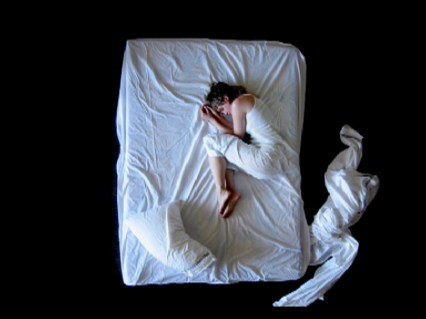
Lamentable You is a short stop motion animation that explores our metaphysical relationships with everyday domestic objects. A woman is woken and disturbed by her sheet.

Created by Cat Jones and Lucy HG as part of Lamentable You, a live, multi media performance project. Performance by Cat Jones. Video and editing by Lucy HG. Sound by Elise Reitze 2015.

Presentations

Screened as constellation as part of Sense of Fear at Cesta Art Festival 2006 with live sound score.

Sydney Art Month at Waverley Studio Artists exhibition, Waverley Library 2015 with sound composition by Elise Reitze (WA).

Save

SYNAPSE

synapse art science collaborations

Recipient of the 2014 Synapse Residency Program, Australian Network of Art and Technology (ANAT).

Building on her recent research into plant signalling and adaptive behaviours, performance artist Cat Jones will work alongside leading neuroscientists concerned with brain plasticity, perception, the remapping of synapses and cortical reorganisation. The partners seek to expand non-pharmacological techniques for the management of chronic pain and are especially interested in testing how creatively-derived augmented reality might be used as a therapeutic tool for core body pain. Alongside this, Jones will research the evaluation, ethics and risks associated with using such tools and techniques in performative contexts.

Hosted by the School of Medicine and Pharmacology, University of Western Australia, Cat’s residency will also extend to the Body in Mind team at the University of South Australia.

Cat’s Synapse research observations can be seen here.

BETWEEN BILLYBURG AND BEAVERKILL

RealTime Arts – Magazine – issue 121 – Dreaming Cities , published 2 JULY, 2014


Transcontinental Garden Exhange. Cat Jones 2013

In New York I can start a conversation mid-sentence addressed to no-one in particular and be sure that whoever is nearby will pick it up and carry on. I can walk the street, give directions to a stranger and end up at dinner with same, a dogma changing neuroscientist.

For me, New York is a place I can turn up in and feel like I’m home. A similar summer 11 years ago seasoned me with lifelong friend collaborators and artistic turning points. I was enamoured to see if we still feel the same way about each other. We do.

2013 was a year of cumulative cities for me, rolling in from a retro media art and feminism party reunion, Berlin; a winter retreat with plants and edible olfactions, Brussels; pounding through ideas, SXSW, Austin, Texas; spilling sensory performance and brittle papers, London; and balancing unbalance in Noosa. When I arrived in New York I carried the politics of touch from Performance Studies International 19, Stanford, packing stinging debates on methodology and mind blowing science from the Plant Signalling Conference, Vancouver along with a personal preview of Michael Marder’s Plant Thinking. Within four days of arriving I had an unexpected exhibition of my work in progress for Transcontinental Garden Exchange at point b. Simmer on high in the midsummer heat of New York for seven weeks. Season to taste.

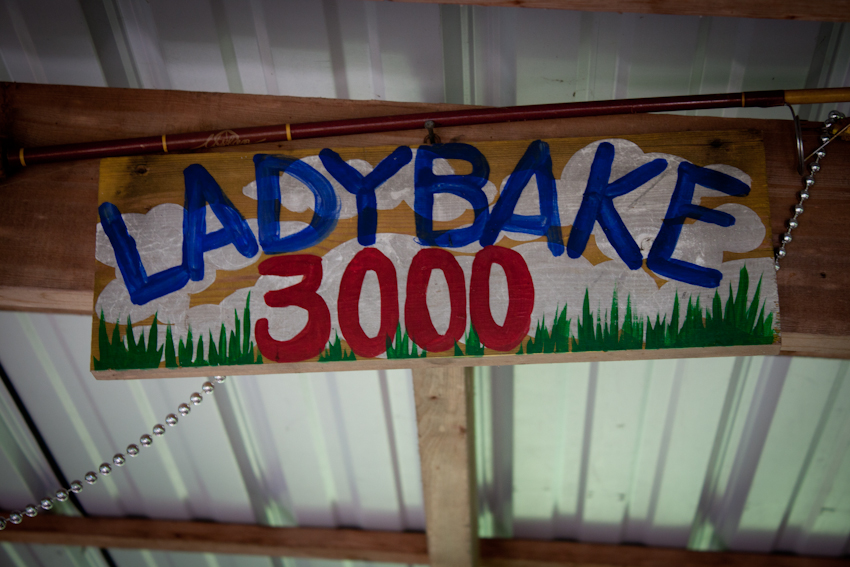
So begins lucid dreaming in New York: public lectures on demand, Weird Wednesdays, behold intelligent slime mould, Secret Science Club, DNA sequencing, Genspace, library daze from florilegia to perfume, the Centre for Feminist Art, conversation with strangers, Live Sound Cinema, Amateur Night at the Apollo, rooftop thinking, urban foraging, the tall green of the Catskills shimmering in my ears, Beaverkill’s Ladybake Art Hole 3000.2 Extreme Croquet, art that grows, eats and sleeps out on the banks of the Hudson and the greenest queerest performance heroine introduction demand “Who is this eating my front lawn?”.

For all the links plus images visit RealTime Arts – Magazine – issue 121 – Dreaming Cities , published 2 JULY, 2014.

Ladybake 3000, Catskills. NY, Cat Jones 2013

ANATOMY’S CONFECTION

Cat Jones, Anatomy's Confection, Proximity Festival, 2014

“…the top pick for anyone unfamiliar with one-on-one performance.” 

Nerida Dickinson, RealTime Arts 124

“Thought provoking, emotional, educational, beautiful, terrifying (just a little) but most of all incredibly morish.  I want to keep eating.”

Audience Testimonials, Program A, Proximity 2014

CONFECTION: (n) a medicinal preparation; a work of elaborate craftmanship; an artistry worn by women.

Anatomy’s Confection is an immersive, one-to-one, performance installation. Comprising a social surgery, a sculptor’s hand, and a labour of love. Cat Jones invites you to come with an open mind and leave with your own intimate body of knowledge on the clitoris.

Originally situated within Fremantle Arts Centre’s history as a women’s home and maternity training centre. Anatomy’s Confection responds to the past censorship of female sexual anatomy, the social effects of this brevity, and urgent need for further research and the importance of widespread education on the subject.

Is this for me? A curious conversation about human flesh for the anatomically playful.

Engaging a sense of deep irony and play, Anatomy’s Confection is visibly moving for audiences of all genders and ages. Responses, often from any single participant, have ranged from shock, shouts of glee, deep sadness, political questioning, utter delight and a pride of achievement. Many participants since been in contact to report their feelings or subsequent conversations with friends, family and even strangers.

Created and performed by Cat Jones. Provocateurs  Kelli McCluskey, Sarah Rowbottam, Steve Bull, James Berlyn.

Anatomy's Confection, Cat Jones, Proximity Festival 2014 Fremantle Art Centre

Presented at Proximity Festival, Fremantle Arts Centre, 22 October – 1 November 2014.

Anatomy’s Confection is flexible and includes performance, installation, and exhibition of participant sculptures in material, print or digital forms.

Anatomy's Confection, On the Clitoris. Image by Cat Jones 2014

“The best by far and left me provoked. I woke still thinking about it…simple and direct and creates these huge waves of thought. I left feeling uplifted, that somehow we were on a path to knowing how bodies really are, as we wade through the molasses of conditioning driven by bizarre cultural influence.”

“Reflective, informative, challenging, fun! Love your performances and the research into them.”

“My clitoris looks AMAZING!”

“So much fun!”

Audience, Anatomy’s Confection, Proximity 2014

“I was completely moved on so many levels. The vast array of emotions I felt to very deep levels include joy, scared, intrigued, sad, shocked, confused, traumatically upset. My mind is struggling to express in words what I just experienced! All were thought provoking and have moved me and touched me deeply very profound.” 

“Beautiful, delicate…spectacular”

“Intricately immersive…”

“Fun and devastating.”

Audience Testimonials, Program A, Proximity 2014


Acknowledgements

Originally supported and presented by Proximity Festival, crowdfunding through pozible Clitorati, and MATCH funding from Creative Partnerships Australia. Special Clitorati thanks to pozible supporters Louise Tomlins, Antonietta Morgillo and Anonymous.

Save

Save

SOMATIC DRIFTS v1.0

Somatic Drifts 1.2sml

…an undoubted highlight of this year’s program….unexpectedly affecting in its therapeutic, closely guided dislocations of sense and self as well as its emotive engagement…the progress of Somatic Drifts will be keenly monitored by this writer.

Breakdown and Repair, Ben Brooker, Realtime 122

Audience responses

…transporting and curious….that was like nothing else I’ve done…the yearning or the desire for it [the touch] is palpable.

Julieanne Campbell, Urban Theatre Projects

Wow. That was wow, amazing. Very intimate. My leg’s become a branch, wrapped around the muscle or the bone, you know, that’s the branch….

I felt happy being a plant. Happy.

Steve Bull, pvi collective

It was loving and caring and fragile. It was a super beautiful experience.

Jackie Johnston, Arts House, Melbourne

I felt like I had become half plant. It was like my fantasy.

Mike

Really beautiful. Stunning. It felt like I was time travelling. Oh I don’t want to go…

Fee Plumley, Really Big Road Trip


Somatic Drifts v1.0, Cat Jones, Adhocracy 2014

Somatic Drifts v1.0, Adhocracy, Vitalstatistix. Image by Cat Jones 2014

Adhocracy 2014,  5-9th June Vitalstatistix, Port Adelaide

Download the full program at the Vitalstatistix website.

Somatic Drifts, a new work by Cat Jones, is an immersive experience for one person at a time. It investigates the potential for a participant to experience the body of another entity through physical re-association facilitated by touch and visual feedback. In Somatic Drifts, Cat combines sensory experience with deep visualisation to explore difference, trans-human and trans-species empathy and identity transgression. How far can we drift outside of the sense of self? What can this drift enable us to change?

Currently in its first stage of research and development, Somatic Drifts v1.0 is an extension of Cat’s previous work The Plantarum: Empathic Limb Clinic, which combines horticulture and neuroscience in a unique live art work where sensory illusion is used to graft a plant in place of the participant’s hand. Empathic Limb Clinic explores ideas of inter-species communication and empathy, alongside a radical applied therapy. In an aromatic environment, scent embeds the sensation as a new memory and the moment moves from a novelty experiment and conversational exchange to an experience that is profound.

During Adhocracy, Cat, with collaborating sound artist Melissa Hunt, begins this new exploration by extending the botanic graft of Empathic Limb Clinic and progressing into a human graft as a full body experience through sensory tests, audio environments, interviews and conceptual discussion with Adhocracy audiences.

Creative team:Cat Jones & Melissa Hunt

 Your chance to see:

  • One-on-one experiences, Saturday at 3pm, 4pm & 6pm.
  • Artist talk, Saturday at 8pm.
  • One-on-one experiences, Sunday at 3pm, 4pm & 8pm.
  • Conversation 2: Right Here, Right Now, Sunday at 5pm (see below).
  • One-on-one experiences, Monday at 3pm, 4pm, 6pm & 8pm.

Conversation 2 (Sunday): Right here, right now

How are artists using mediated communication strategies to make meaningful live experiences? With Cat Jones (Somatic Drifts), Heidi Angove (Testing Boundaries), Kelli McCluskey (black market), Nathan Harrison (Telemetry) and Emily O’Connor (Heat).

For best effect listen to the video below with headphones.

Somatic Drifts v1.0 from Cat Jones on Vimeo.


Research and development towards Somatic Drifts has been supported by the federal government through the Australia Council, it’s arts funding and advisory body; Waverley Council through a Bondi Artist’s Residency, Vitalstatistix, and the Creative Practice Lab at University of New South Wales.

FIELD SUITE AT THE WIRED LAB

realtime tv: Sarah Last, Wired Open Day from RealTime on Vimeo.

On Cat Jones’ Field Suite

“It’s subtle, multi-sensory, esoteric and a great lateral addition to the program.”

Gail Priest, Together Listening to Landscape, Realtime 121

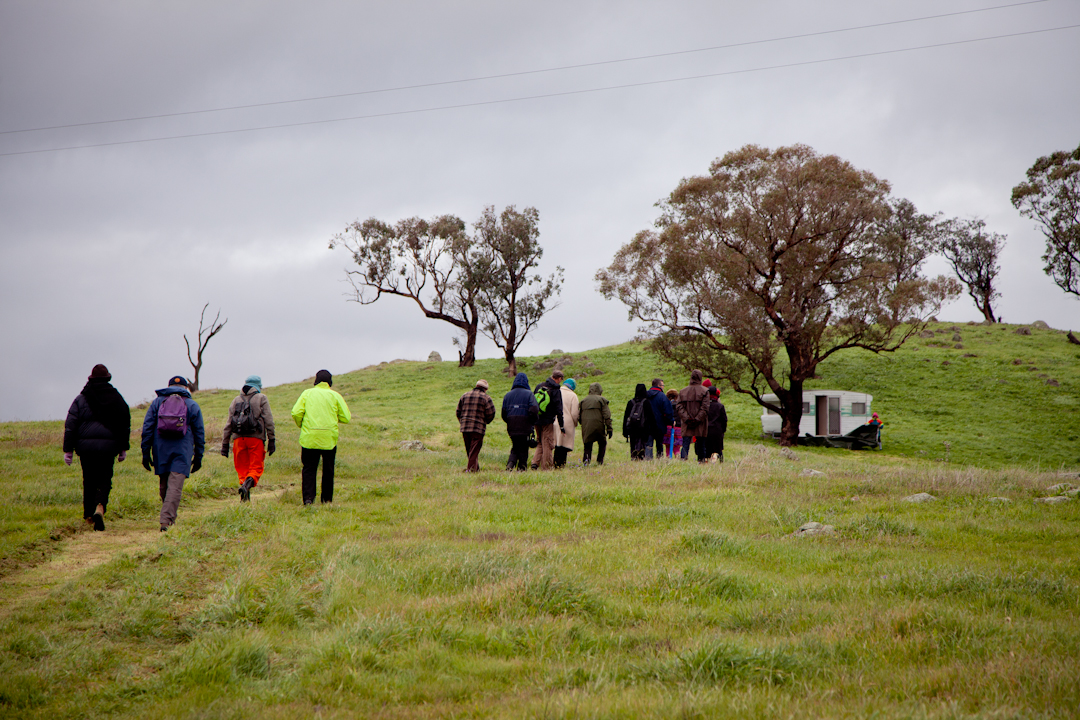
Wired Lab Open Day 2014 presented a range of landscape scale, site responsive projects.

In the video above Sarah Last, Director The Wired Lab, describes Cat Jones’ Evolution: A Walk [with Herbivores] and Plantarum: Empathic Limb Clinic (cue from 6:20 – 8:22mins).

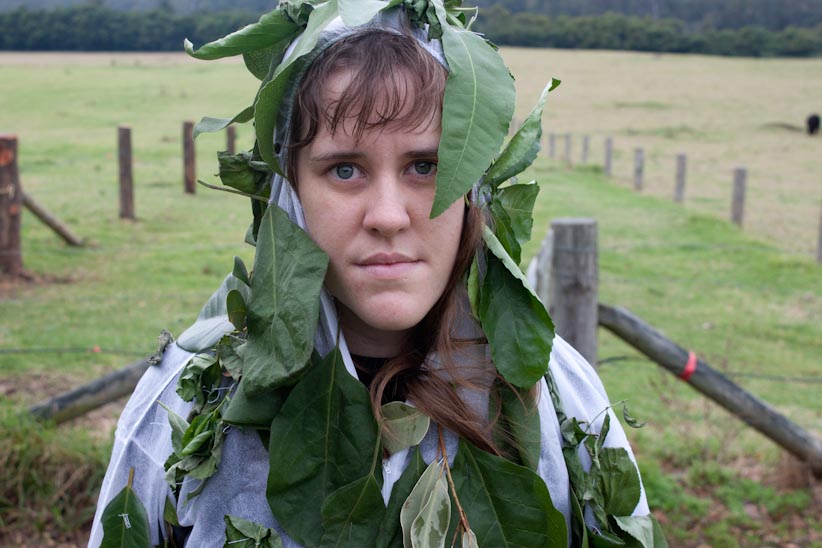
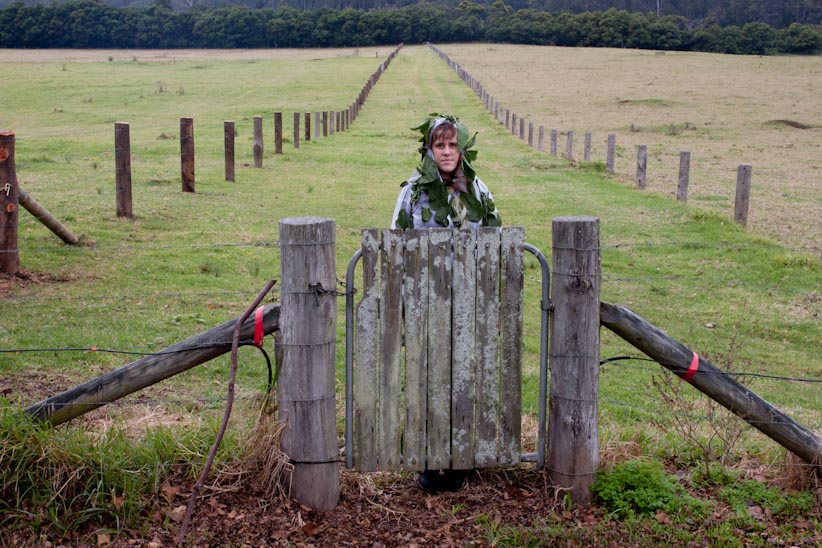
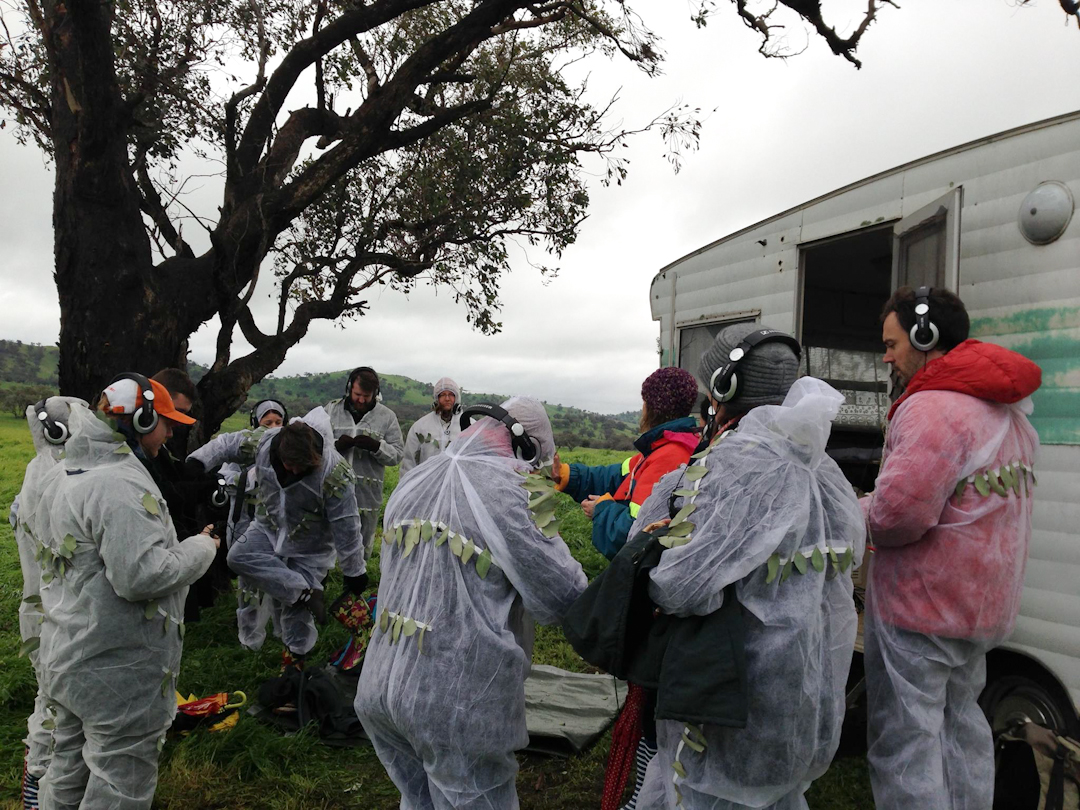
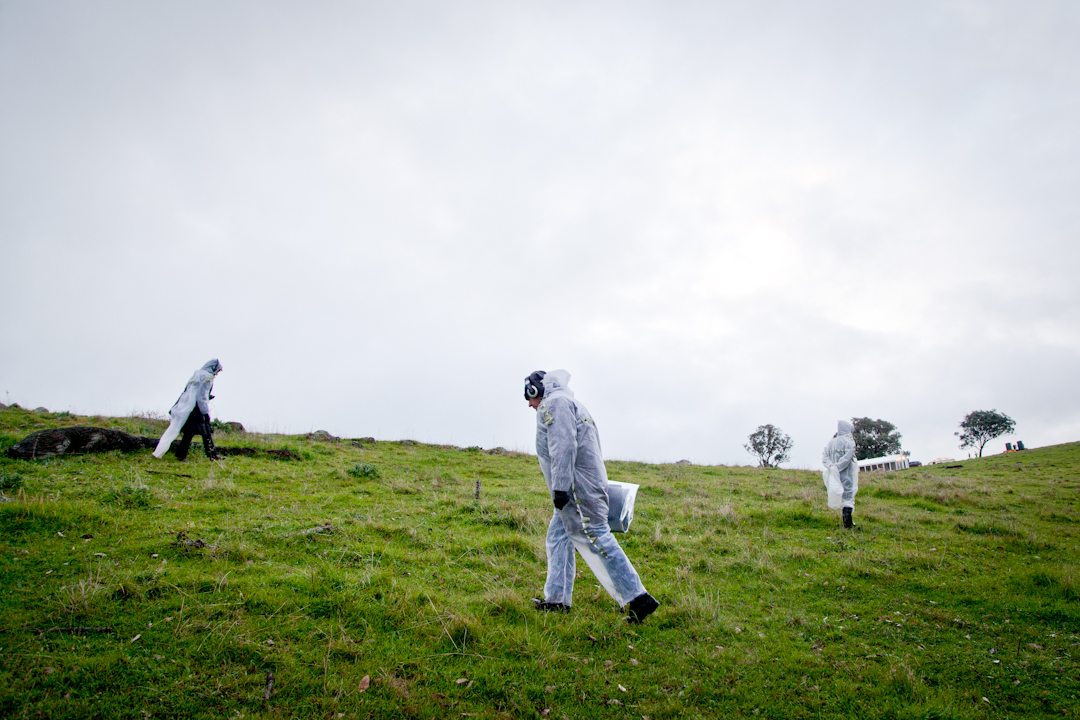
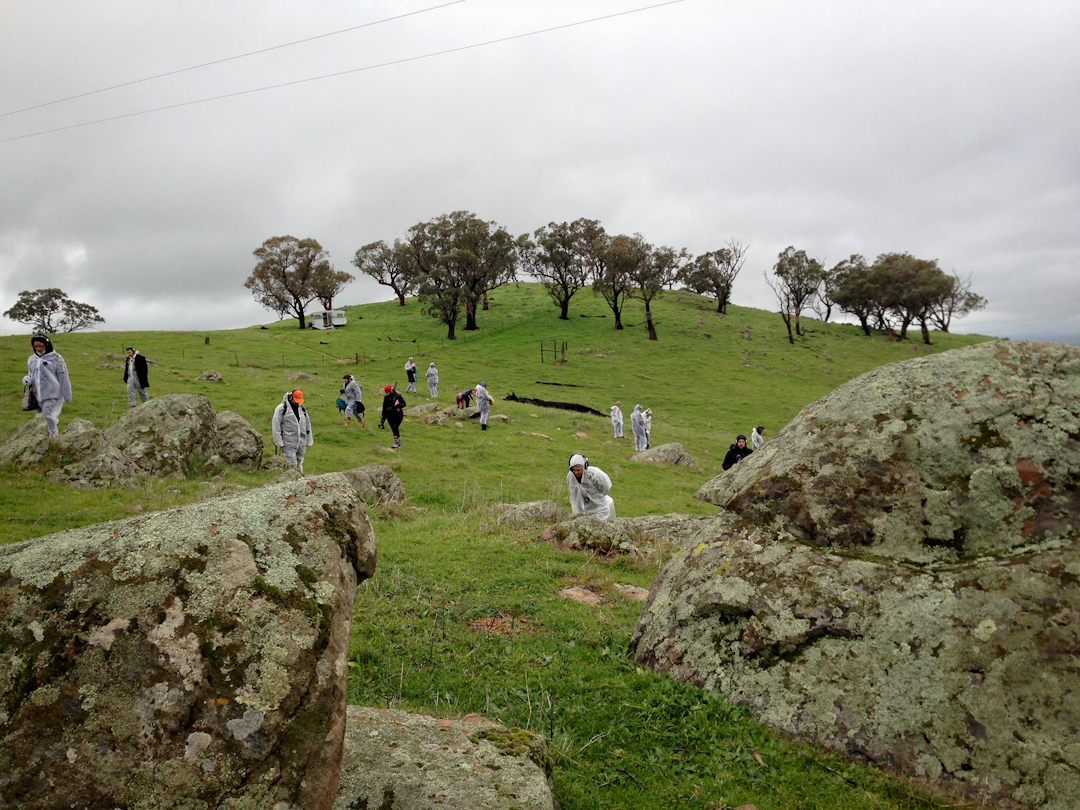
After a residency on site to research native, endemic and seasonal plant life, Cat developed a bespoke version of her audio tour A Walk [with Herbivores] with composition by Melissa Hunt for the Wired Lab’s Grey Box grassy woodland country.

Cat installed The Plantarum: Empathic Limb Clinic as a field lab. This new treatise on the art of grafting worked with the single on-site specimen of Artemesia Absinthinium, enhanced by the plant’s own long history of human mind alteration.

PLANTARUM: EMPATHIC LIMB CLINIC

Plantarum: Empathic Limb Clinic by Cat Jones Proximity Festival. Image by Fionn Mulholland 2013.

“Engaging…whimsical…memorable. This performance was over way too soon.”       

Nerida Dickinson, Artshub

“A complex, immersive and inventive experience”

Astrid Francis, Realtime 118

“Subtle, multi-sensory, esoteric and a great lateral addition to the program.”

Gail Priest Realtime 121

Empathic Limb Clinic is an immersive sensory experience for one person at a time. It offers you the chance to cultivate the mind and reconsider your relationship with nature and each other.

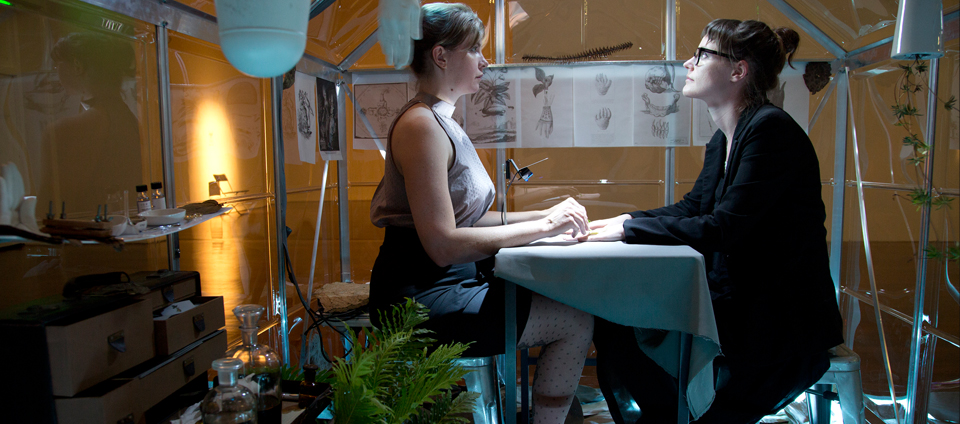
This unique live artwork blends horticulture with neuroscience. Cat Jones invites you into The Plantarum, a mobile field laboratory of micro-experiments for an appointment and experience that may literally change your mind.

Jones leads you in an intimate conversation between the human mind and flora. She takes you on a surprising internal journey through deep time from the past, the present, into the future to raise questions of empathy that are global and social, political and personal.

Created and performed by Cat Jones with sound by Melissa Hunt. Provocateur, Kelli McCluskey. Curators, James Berlyn, Sarah Rowbottam.

Is this for me? A sensory experience for those not afraid to experiment with plants and the mind.

This work is a precursor to Somatic Drifts, further expanding Jones’ art/science research combining illusion, empathy and health.


Presentations

performance studies 19, Stanford, USA, June, 2013

Proximity Festival, Perth Institute of Contemporary Art, Perth, 24 October – 2 November 2013

The WIRED Lab, Muttama, NSW, 3 May 2014

The Plantarum: Empathic Limb Clinic Proximity Festival 2013 promo from Cat Jones on Vimeo.

“Original, so creative, and lots of fun”

“Plantarum” brought me to tears”

“So special”

“I could feel it for days”

“I will remember this”

Audience Testimonials

The Plantarum: Empathic Limb Clinic for Proximity Festival, PICA, Perth 2013. Image Cat JonesAcknowledgements

This project was supported by Australia Council for the Arts through a Creative Australia Fellowship, fo.am and CIA Studios.

Empathic Limb Clinic was first presented at performance studies 19, Stanford, USA.

Special thanks to The Wellcome Trust Library for access to rare materials, SymbioticA, Anna Tregloan, Prof Stephan Schug, Michelle Nunn, Janet Carter, Pierce Davison, Loren Kronemeyer and Cate Hull.


GENDER GENITALIA & THE OLD HAND IN HAND

Published in Realtime 115 June July 2013

The Body in question: SPILL festival of performance, London

Walking: Holding, Rosana Cade Walking: Holding, Rosana Cade
photo Rosie Healey

Pacitti Company’s SPILL Festival is two weeks of sensorial encounter where the personal, political and mythological are transferred through the bodies of performers and audience. Sixteen of the 25 works are by women. The following three shots glide from wide, mid to hand-held, close-ups of the gendered, queer world we live in. If this opening has a certain eau de pussy, it’s an invitation to read on, not necessarily a warning.

Lauren Barri Holstein, Splat!

Splat! is the sound of 100 tomato juice filled balloons thrown and burst on a knife’s edge clutched by The Famous Lauren Barri Holstein’s vagina (insert handle first if you want to try this at home). It’s the sound of douche and douche again all over the chest and mouth of someone you care about. Give me a towel.

It’s a deconstructed post-fairytale in a forest inhabited by zombie Woodland Friends, where Bambi, canal birthed in a condom placenta, trophy mounted, rollerskates blindly through emissions, urinates near the vomit, near the target, on twins and hangs as a slaughtered carcass stuffing a burger in her cake hole. It’s a feminine schlock technical rehearsal on a closed Hollywood set with The Famous calling her own stage cues and requesting repeats. It’s a tower of cliché, ideology, genres and dispassionate delivery that might make you choke, with laughter.

You are shunted from wince to cringe to clenched sphincter then leant towards a performance precipice and asked with a hand held mike, “How do you feel emotionally, right now?” She has to go harder because you can’t feel it anymore. Do it again.

Splat! straddles porn, gets bulimic at the microphone, cleans and sticks the unstickable with tape. Its frame has a weft that might muddle your expectations of the next brown-eyed money shot—the sluiced mountain of images is planted with tender instructions, sensitive ballet pointe ballads, the full, uncensored, itemised budget for the show and the soft silence of long blonde hair clippings snowing gently down. Put that back together.

It’s a vulnerability fuck-over and The Famous Lauren Barri Holstein is in control.

Lucy Hutson, If You Want Bigger Yorkshire Puddings…

Lucy Hutson is the kind of cooking companion who makes her own personal recipe. In If You Want Bigger Yorkshire Puddings You Need a Bigger Tin she mixes sexual politics with a family focus group, body identity and a biography of gendered experiments into a disarming dish served as a dialogue between documentary video and contemporary performance, with the lights on.

In an era where queer women debate the actual choice made by younger women in transition, rather than the right to choose, Lucy Hutson offers a home-made brand of good old fashioned asexual identity that is delightful and refreshing.

In the same way you can make a food comparison by asking if your grandmother would recognise it, Lucy approaches gender transition by preparing to run it past the ladies at the Women’s Institute. No snips and no tucks, just a ball of wool, a roll of cling wrap, a shot of self-acceptance and the courage to live with fuzzy edges. The Women’s Institute would be proud.

Rosana Cade, Walking: Holding

I dare to keep my eyes closed on a busy London road and anticipate each swirl of density coming towards me as the moment Walking: Holding will begin. Rosana Cade’s delicate, cold fingers take mine for a walking story of same sex, mixed ethnicity, fag hag and other couples.

Cade and her serial strollers lead us through personal experiences to the point where self-consciousness can invade intimacy and hands meeting below the hip divide.

Rosana’s stroll takes us to an ironwork sign, “LADIES.” I walk with a young, cross-dressed man in a sweet floral blouse, flats and a touch of lippy, down a small dirty street where big men manhandle large tools. I’m released between a van and a tag wall where anticipation and ankles tip awkwardly on a pile of rubble. It’s funny how many loaded frames there are in nondescript locations. I hold the hand of a man whose story makes me clutch it. I stop breathing. This is close. We recover when he asks for, and I offer, something of my own that raises his eyebrows. We part at a sheened wall where the close reflection of our coded couple is joined to make three before it becomes a new two.

These walks take you past public displays of affection, and more: from the throwaway indulgence for heterosexual, Caucasian-matched, western couples, to the erosive emotional fallout of hand division for others and intimacy rarely touched between strangers.

Do you think we make a happy couple on these strange streets?

© Cat Jones; for permission to reproduce apply to realtime@realtimearts.net
EVOLUTION: A WALK [WITH HERBIVORES]

“Scented, sexy, queer…and dark”

Helen Paris, curious.com

Evolution: A Walk [with Herbivores] is a site responsive audio tour. Wearing bespoke olfactory signalling suits, audiences are lead through a ‘field guide’ of evolution from cyanobacteria to Homo sapiens. Highlighting endemic local species, recent discoveries in plant signalling, interspecies communication and a unique take on social politics, this walk enables audience to see, hear, taste and smell the inter-species communication that surrounds and reassess their own role in the hierarchy of the Eukaryotic Kingdom.

A Walk [with Herbivores] encompasses participatory actions such as inter-species sex, assisted procreation, group parenting of a painful embryo, DNA degustation, and a reclining meditation from the Voice of Plant Consciousness.  This informative live artwork combines humour with a deeply relaxing moment in nature and prompts curiosity, surprise and delight from audiences.

Conceived, written and performed by Cat Jones with sound by Melissa Hunt.

Presentations

performance studies international 19, Stanford, USA 27 – 30 June 2013 as part of Field Suite, Transcontinental Garden Exchange along with  In the Waiting Room: Needling Clitorides Histories and Fieldwork: Empathic Limb Clinic. Sound mix by Cate Hull.

the WIRED Lab, WIRED Open Day, 3 May 2014 as part of Field Suite. Taking place in grassy woodlands country the herbivore suit was  augmented with Grey Box Gum leaves in collaboration with Red Leg Grass, Kurrajong, local crops, ants, fungi and lichen. Country Mushrooms, site responsive sound composition by Melissa Hunt. Suits created by Kate Brown. Walk accompanied by Kate Brown, Melissa Hunt and Cate Hull.

Acknowledgements

Developed with support from the Australia Council for the Arts through a Creative Australia Fellowship 2012, residencies at fo.am, Belgium and Bundanon Trust NSW.

Special thanks to Sarah Last, the Transcontinental Garden Exchange artists Amelia Wallin, Maria White, Lisa Mumford and Leanne Thompson and to Cate Hull.

NEEDLING CLITORIDES HISTORIES

In the waiting room Needling Clitorides Histories is a live art work for 2 or more people at a time.

First presented at Performance Studies International 19, Ternate Park Rose Garden, Stanford (USA) 27 – 30th June 2013 as part of a triptych with the site responsive Evolution: A Walk [With Herbivores] and Fieldwork:Empathic Limb Clinic.

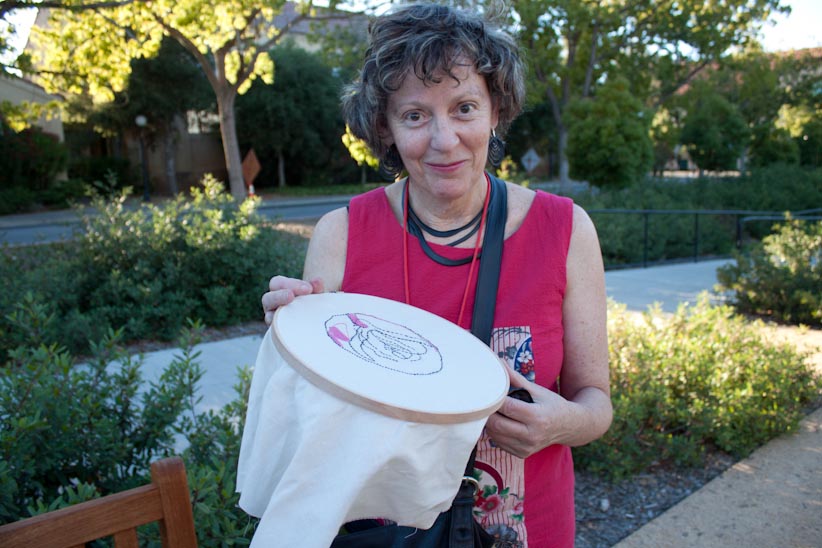
Visitors in a waiting area add to two embroidery panels. One outline is the flower, Clitoria Ternatea, and one is the human Clitoridis.

Participants are invited to needle the fabric of society with the threads of two stories and consider parallel histories, debated nomenclature and extraordinary censorship for these two organs, at the hands of western science from 18th-20th Century. They are offered the brightly coloured blue tea of the Clitoria Ternatea flower (used in some cultures as an aphrodisiac). From time to time Jones stops by the waiting area to reveal further points and protagonists in the story or answer questions that may have been raised in the participants conversation. Together the embroiderers create a botanic dialogue that joins the past with the present.

The action raises revelatory, political and personal conversations that question the authority of science, and consider the extent of censorship on social thinking and awareness of anatomic knowledge, genital mutilation practices and how little research has been done around the clitoris. From self-conscious titillation to unexpected intimacy with a stranger audiences are left with the feeling of political responsibility. The story of Clitoridis, the full image and details of which was only restored to anatomic textbooks in the 1995, has had a profound and emotional effect on some female participants.

Participants grew visibly attached to the works they contributed to, and asked to continue their embroidery at other times returning on subsequent days to add further stitches.

Conceived and presented by Cat Jones.

Research for this project has been supported through Australia Council for the Arts through a Creative Australia Fellowship 2012, and residencies at fo.am, Belgium and Bundanon Trust NSW. Special thanks to the generosity of The Wellcome Trust Library for access to rare materials, the artists involved in Transcontinental Garden Exchange for feedback, prototype testing and stitching.

FIELDWORK: EMPATHIC LIMB CLINIC

Delightful! Rich dark smart sexy scented workHelen Paris, curious.com

Wow, how can everyone come see this.” Leslie Hill, curious.com

“Wonderful, really wonderful” Caroline Smith, live artist and former Arts Editor of Attitude magazine, London

Image by Cat Jones 2013

First presented at Performance Studies International 19 [psi19] Stanford USA 27 – 30th June  2013

Fieldwork: Empathic Limb Clinic is an intimate sensory experience for one person at a time.

Audiences were invited to make a special appointment as part of a triptych of short live art works including Evolution: A Walk [with Herbivores] and In the Waiting Room: Needling Clitorides Histories.

All these works are flexible, site responsive, suitcase ready and available to tour.

The Empathic Limb Clinic offers Plant Limb Therapy, a cure for the brown-of-thumb and general vast improvements for others.

Physically pleasurable, Plant Limb Therapy allows participants to experience a physical, perception shift that opens the vegetal mind to explore their luminous green. (Hildegard von Bingen)

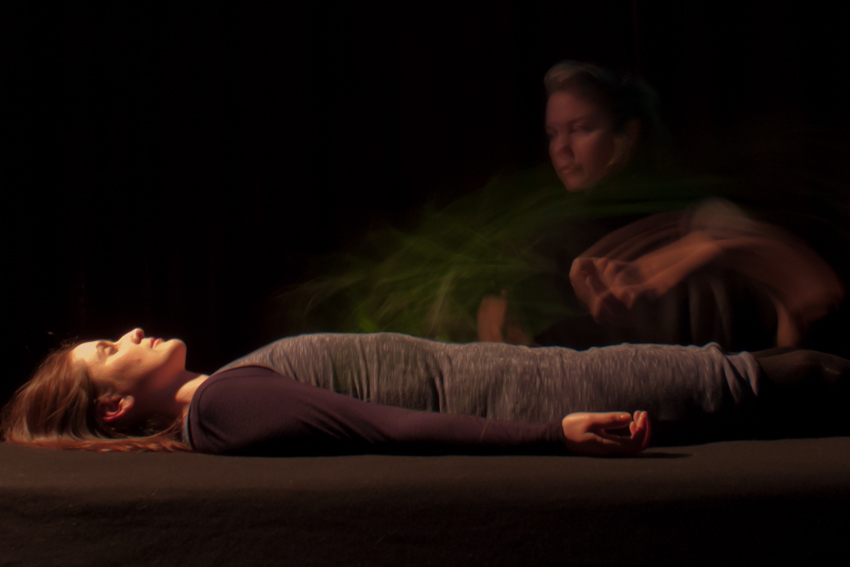
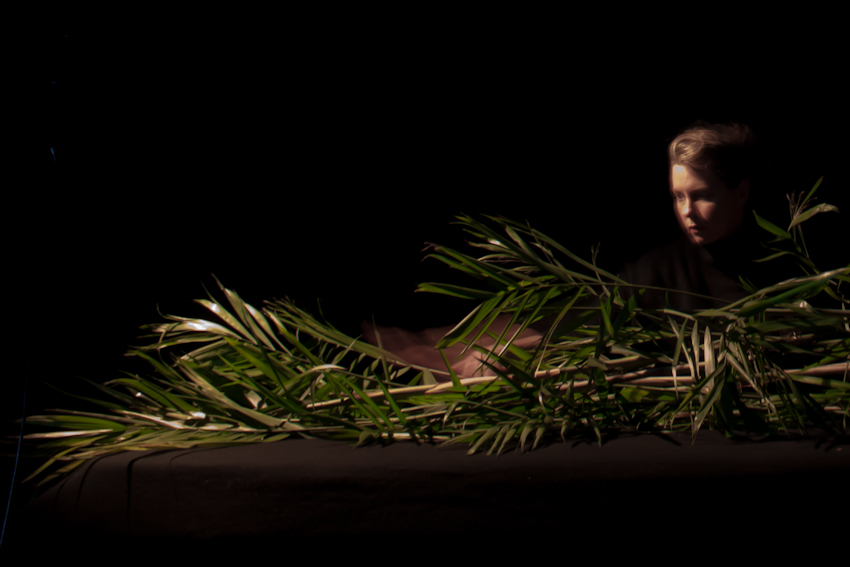
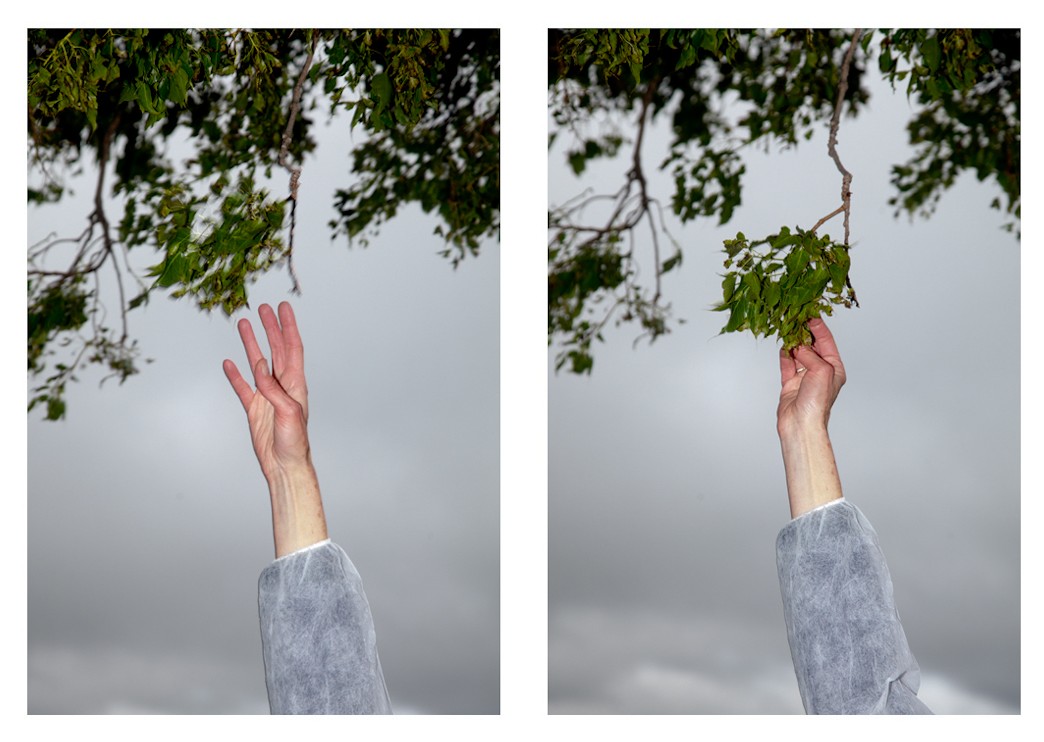
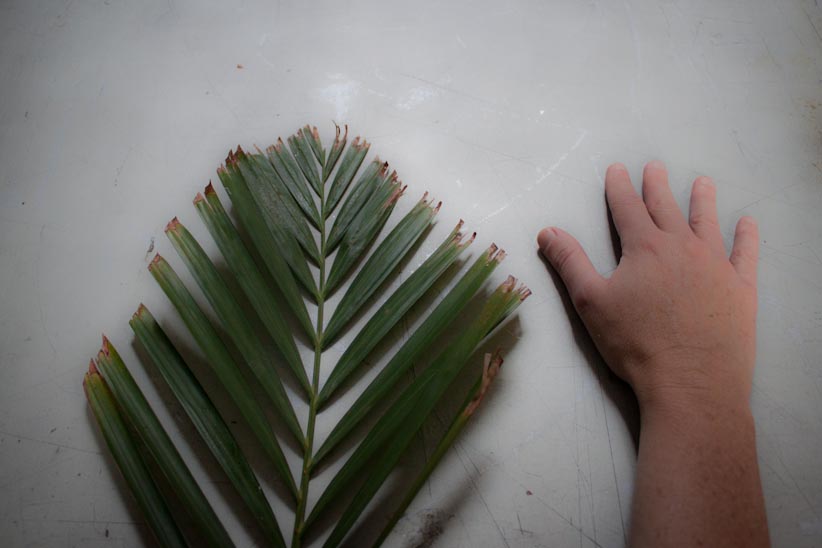
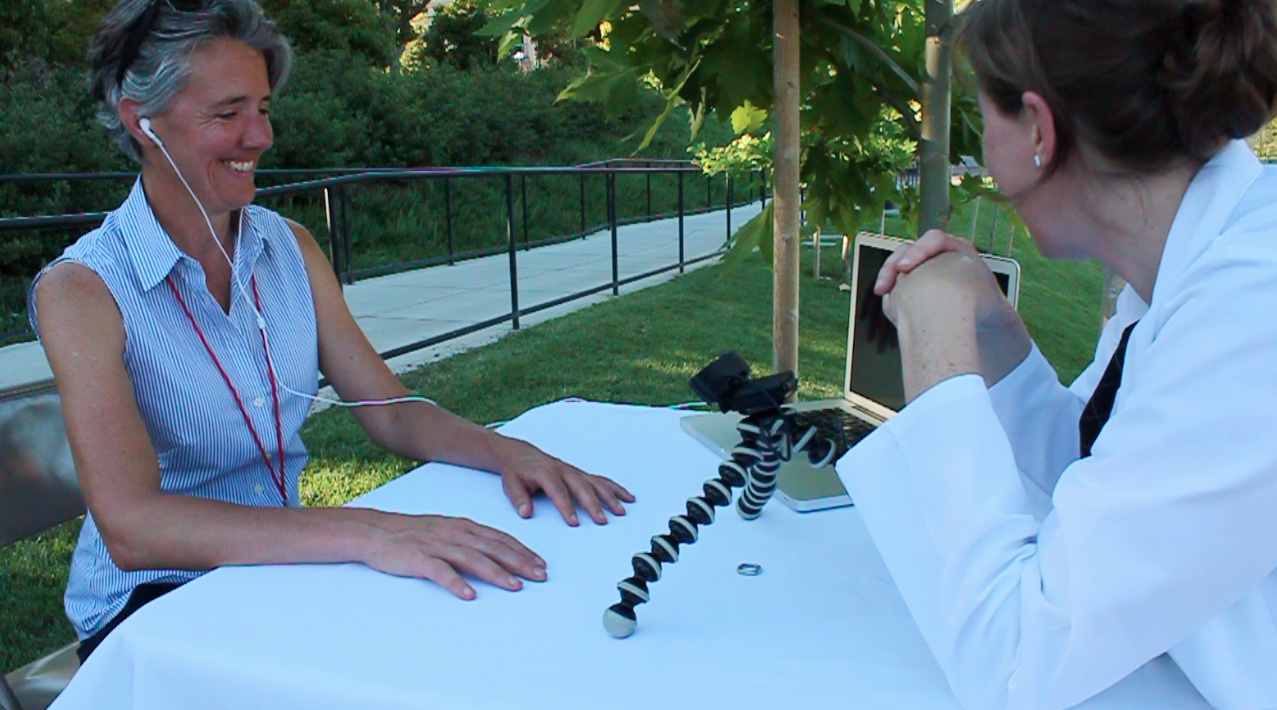
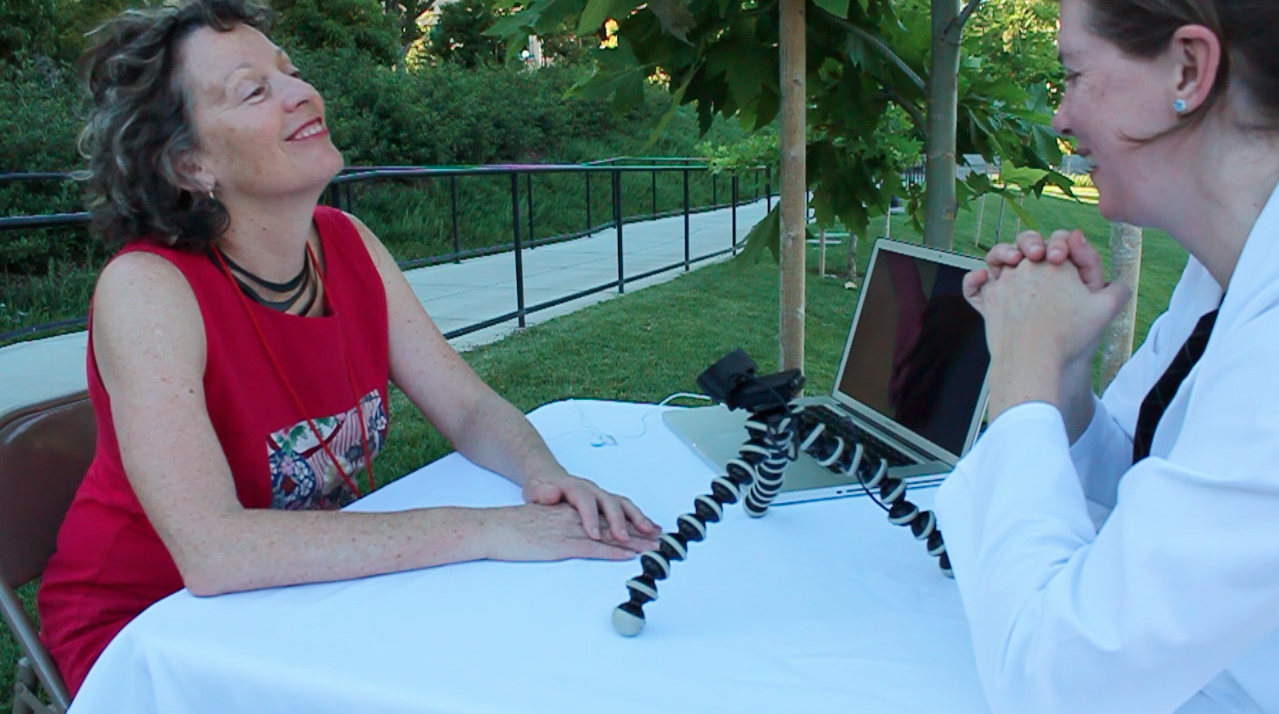
Using tactile stimulation with leaves (from a local plant) Ms Jones assists the participant to form a sensory relationship with the visual mirror image on screen. Gradually, one of their on-screen limbs is replaced by a full plant limb (same species as leaves), and the tactile stimulation continues both on and off screen. This visual change causes a few moments of perceptive disruption before the mind remaps visual feedback and associates the new image with the physical sensations felt. Towards the end of the therapy a meditation is triggered that assists the participant to assimilate as a new hybrid being.

A significant change is observed in audience energy and behaviour during the 15 minutes of the therapy with a number of participants wishing to talk about their relationship with plants afterwards. Approached by the participant at first as a novelty, the therapy quickly becomes a very intimate and meditative experience.

Pictured above is a mobile clinic (off power) in the context of a large park . This work can be presented with modular aesthetic references.

Fieldwork: The mobile clinic (off power) interrupts the aesthetics of an outdoor landscape presenting a surprising mediated nature experience in the middle of a field, forest, garden or park. Fieldwork poses questions about the present and future state of the anthropocene.

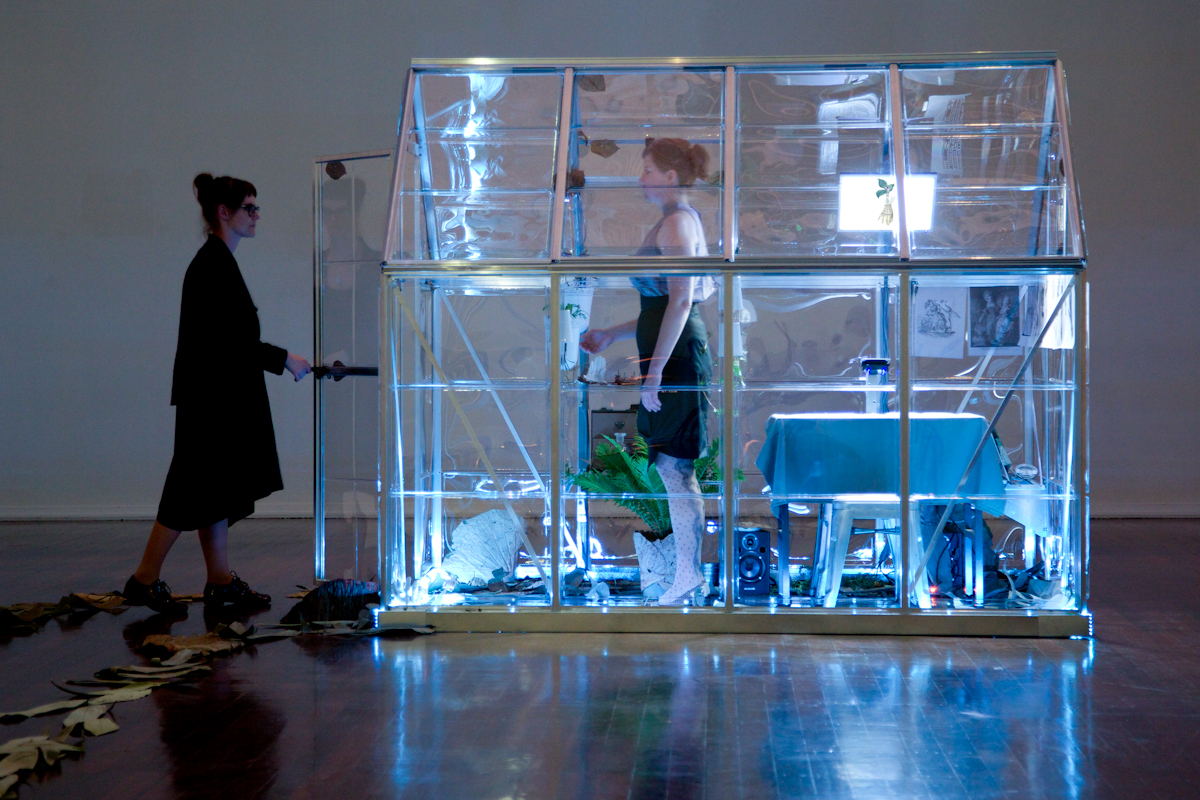
The Plantarum:  Is a constructed oasis environment in the form of a greenhouse and a field laboratory of micro experiments.The Plantarum interrupts the aesthetics of the gallery or the landscape and simultaneously blurs borders of history and the present scientific, industrial and domestic spheres. Follow this link for information and media and audience responses on The Plantarum: Empathic Limb Clinic at Proximity Festival 2013.

Research for this project has been supported through Australia Council for the Arts through a Creative Australia Fellowship 2012, and residencies at fo.am, Belgium and Bundanon Trust NSW. Special thanks to the generosity of The Wellcome Trust Library for access to rare materials, the artists involved in Transcontinental Garden Exchange for feedback and prototype testing and to Cate Hull.

RADICAL ECOLOGIES LIMITED EDITION SCENT

CJ_IMG_16__00908

Radical Ecologies limited edition scent from the Somatic Drifts series.

Radical Ecologies is a distillation of concepts combining deeply personal experience of temporal transgressions of body and mind and transformation through grief. This work is influenced by a body of research on human plant relationships, vegetal philosophy, multi-species sensory signaling.

Combining earth, oceanic, botanic, animalic* elements with the female body in the form of the artist’s own tears, this composition is designed to change over 24 hours and longer from evolutionary beginnings to the post-human. It evolves from a fleeting Matsutake head note to a complex heart of Beeswax, Milk, Ambrette and Seaweed before long lasting base notes of Ambergris and Musk.

This limited edition of thirty comprises a symbolic box setting signed and editioned by the artist, printed epitaph, a glass and black rubber dropper, and delicately pale, green liquid (30mls) in a violet glass bottle designed to preserve it over a lifetime.

Radical Ecologies premiered at Perth Institute of Contemporary Art in 2016 interred in a ceramic urn and base within a concrete text epitaph. The Radical Ecologies epitaph is featured in Now, Past, Later limited print publication edited by Maxwell Williams and distributed by the Institute of Art and Olfaction.

  • Contains a small amount of beeswax essential oil

If you would like to acquire this limited edition scent please make an enquiry.

Save

Save

Save

Save

Save

Save

Save

Save

Sav

Save

Save

OBITSU SOLO SERIES

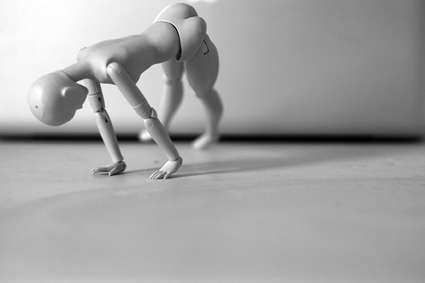
A series of stills and animated dance solos exploring the featureless female form and disembodiment in contemporary dance practice.

Obitsu Solos’ explores the female form as an object in contemporary dance aesthetics via anthropomorphic action, commenting on physical control and facelessness as a means of objectification.

No hair, eyes, mouth, obitsu has no gaze, no voice, existing in stasis without the animator, yet still strangely compelling, such is our conditioned fascination with the female as object.

Extending a body of previous live work that creates subversive female identities, communication and actions.

Acknowledgements

Developed at Bundanon Trust Artist Residency in 2012.

BULLY BEEF STEW

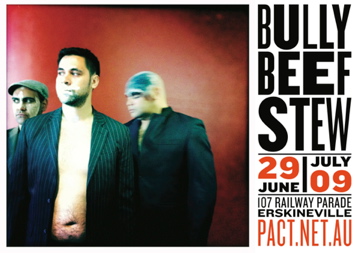
mbhk_pact_Bully Beef Stew_Postcard_140611_FINAL

Bully Beef Stew. Three Aboriginal Men is an original play written by Andrea James, Sonny Dallas Law, Colin Kinchella and Bjorn Stewart.

A fearless theatrical exploration of Aboriginal manhood. Three young Aboriginal men, Sonny Dallas Law, Colin Kinchela and Bjorn Stewart have been working together with Director Andrea James to transcend usual notions of what it is to be an Aboriginal man today. Drawing on their own personal experiences and taking inspiration from their fathers and other Aboriginal men in their lives, past and present, they have cooked up a performance that promises to feed your heart and soul. At times achingly beautiful – at others, raw and exposed – these men bring to the stage a resounding spirit, a dreaming – an initiation of sorts.

Commissioned by and first performed at PACT centre for emerging artists in June 2011.

Dramaturg and Director Andrea James, Choreographer Kirk Page, Media Artist Jacqui Mills, Sound Designer Melissa Hunt, Lighting Designer and Production Manager Clytie Smith, Production Stills Heidrun Lohr, Videographer Sam James.

Cat Jones, PACT’s Artistic Director commissioned Bully Beef Stew. Three Aboriginal Men and was Creative Producer and promotional photographer for the production.

The work has since been published as part of Blakstages and an excerpt has featured in the touring exhibition Thank You for the Days: My Teenage Years by Djon Mundine beginning with Lismore Regional Gallery 2012.

This performance is available for tours – please contact PACT centre for emerging artists for the tour package and further information.

Bully Beef Stew Trailer from PACT centre for emerging artists on Vimeo.